If Jan Koum ran Indian cricket
Apparently, yesterday India completed a “great” run chase and won a game of international cricket. Customary pictures of the playmaker with bat aloft (never a bowler when it’s India mind you) adorn the front page of daily newspapers and most news sites. cricinfo’s facebook feed celebrates yet another Kohli 100 in yet another successful run chase. It might as well be just a coincidence that the win came in the subcontinent against Bangladesh.
Since Jan 2011, India has played 31 test matches, won 12 and lost 12. Not bad? Of the 12 wins, 11 came from the 15 matches played at home and the solitary away win came against the distinctly ordinary West Indies. India’s away record in that time: Played 16, Won 1, Lost 12.
And that’s the reason that I have about as much interest in the Asia Cup as a terminally ill patient would have in signing up for a 25 year vacation timeshare.
With the snake oil salesmen that form the BCCI using financial clout to dole out ridiculous 2 test series, the perennial distractions of the next easy ODI series, the flash bang of the corrupt IPL, chances that India will build a strong test team are about as good as a million monkeys let loose at a million typewriters recreating Shakespeares works. Possible but improbable.
With the hot press about whatsapp’s acquisition by facebook and the famed note the founders kept at their desk to retain their laser-like focus on the value their product offered, I couldn’t help but daydream about the idea of a clear-minded approach to (re)building the product that is Indian cricket.

No Ads
Read, nothing that detracts from the viewer experience. Selling broadcast rights to the highest bidders for amounts greater than the GDP of most other cricket playing nations is all fine, but let’s not abuse the viewers with production that cuts away to hawking smartphones to ecommerce retailers before the last ball of an longer than usual over is bowled. Or sully the screen with so many sponsor logos that it’s hard to tell the difference between animation of a kid doing a cartwheel because his mom uses magical cooking oil and a fielder diving to stop a cover drive. Take a leaf out of baseball broadcasting and demand improvement in telecast of a sport that lends itself to so much more analysis. Your most important asset are the people who still follow the game. Don’t take them for granted.
No Games
Messing with tour schedules to bully other cricket boards, then cutting down on overseas tests and padding domestic ODI series because that’s where the wins are likely to come appears like something out of the script of Sacha Baron Cohen’s ‘The Dictator‘. The BCCI might as well hold families of opposition fast bowlers and captains hostage during overseas tests. Instead, focus on developing the best possible team for each format, know that you can’t claim superiority without blooding in genuine pace and spin bowlers, quality top and middle order bats. It’s really not as difficult to get the talent flowing in a country that’s still hopelessly partisan towards one sport.
No Gimmicks
Buying loyal press by only allowing employment for commentators who will not question the administrators on all the laughably apparent motives. Blatant misuse of its market monopoly by including clauses in commentary contracts that forbid on-air comments or discussion about squad selection, disallowing live updates of scores just to squeeze out more revenue. What’s next, charging residents living in the vicinity of cricket stadiums a premium for breathing the same air that its cricketers breathe? Cut the BS and let’s hear Ian Chappell’s dissection of why MSD’s insistence on a deep cover is costing India matches than Alan Wilkins sycophantic blather.
But instead of whatsapp, Indian cricket is likely to continue with the indiatimes style of user experience. But only if…
Return of the ugly Aussie cricketer
I started Ashes 2013 rooting for the Aussies. As well as England had played over the 18 months leading up to the “away” leg of the Ashes, I couldn’t hold them in the awe-inspired regard I’d held the early 2000’s Australian team. This was mainly their own doing. While the previous generation Aussies played an exciting brand of attacking cricket, this English team was schizophrenic, playing flamboyant cricket when on top, at other times, slowing over rates down to ridiculous levels to delay the opposition declaration. Not the stuff of champions.
Then Mitchell Johnson happened. As his usually wayward thunderbolts repeatedly homed in on English throats, you couldn’t help but feel some sympathy. But it was still good to watch the Australians make such a strong comeback.
 Then the nonsense began. With the opposition on the mat, the Aussies became a pack of hyenas around wounded prey. Clarke threatened to break Anderson’s arm. Warner spoke of fear in Trott’s eyes. Stokes and Johnson jostled, which is fine, except it was followed up by an unending barrage of verbals from the bowler and close-in fielders. Every Johnson spell, as incisive as it was, had the tedious contrived drama of a soap opera with batsman and bowler going toe-to-toe, f-words being exchanged liberally. Fielders chiming in to add to the schoolyard show of bravado.
The message going to all kids starting to play backyard cricket, boorish behaviour is a part of playing good cricket. That any fastbowler worth his salt should look like he’s about to physically assault the batsman, and every close-in fielder’s job is to be in the batsman’s ear, threatening physical harm.
Pity the Aussies are sore winners. Now one can only hope that Steyn and co. and cut them back to size.
An Anthology of Sachin Tendulkar Tributes …

Sachin Tendulkar’s career had been overwhelming and so too was the deluge of tributes.
Here’s my (far from comprehensive) selection of favourites.
Rohit Brijnath wrote as only he can. If you were fortunate enough to live in Singapore, (or were a subscriber of the Straits Times), you’d have read a lot more than the ones that finally made it to the wider world outside. At first, there was The Patriotic Pandemonium of Sachin Tendulkar at the time of the announcement of Tendulkar’s retirement. This was on the 15th of October, more than a month before the day it all ended. Read the first line of the piece a few times before going further – “WILL he make a speech, this retiring Sachin Tendulkar, in his home city of Mumbai in November during his last Test and is it the closest we’ll come to a nation crying?“.
Then the…
View original post 597 more words
Of Tears, Words, Emotions and a Career..
The emotion of the final day of Sachin Tendulkar’s career .
Captured here by Rohit Brijnath.
From the Straits Times.
Today was too much even for him. Today, on his last cricketing day at Wankhede Stadium in Mumbai, even he, the impassive man, left the field forever with a stump in one hand and a tear wiped with the other. He was not alone, for this day – for those in the stadium and beyond – resembled an emotional mass. Sport has rarely seen the like of it.
Today, Sachin Tendulkar, who spent a life, he said, over 20 metres – the length of a cricket pitch – for 24 years, was retired. His white clothes to be packed. His bats to be mothballed. His competitive instinct to be buried. A long story, even if it went on longer than it might have, has concluded. There is for…
View original post 900 more words
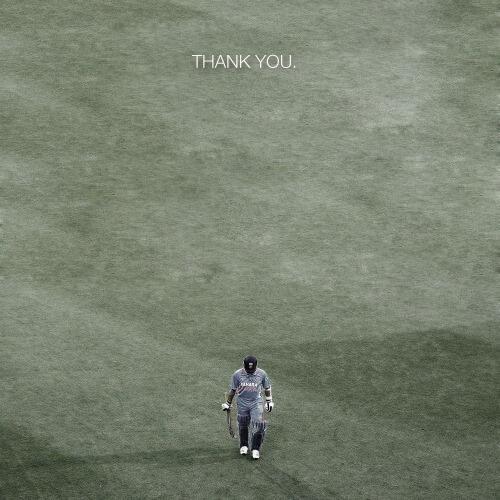
15th Nov 1989 – 16th Nov 2013
Reminiscing Sachin
We didn’t have a television when he played his 1989 debut series in Pakistan. Scores suggest none of the matches came close to a result, with 28 being the highest number of wickets falling in the 1st test match of the series. Going by the high-strung emotion I remember experiencing in the ODI contests of the mid-90’s, one can imagine the pressure both teams must have played under in India-Pakistan cricket matches. The fact that Imran was “unhappy” with the drawn series while Srikkanth was “delighted” probably points to the superiority of the Pakistan test team. For India, the series belonged to S Manjrekar with 569 runs at an astounding average of 95 with a double-hundred, 1 hundred and 3 fifties.
Making his debut at 16 years 205 days and batting at #6, Tendulkar had a modest beginning with 215 runs in his debut series, at an average of 36 with 2 fifties.
 Although I have no memory of it, apparently, the folks watched on our black & white Dyanora TV when he became the 2nd youngest by 30 days at 17 years 112 days to score a century at Old Trafford. This time, the batsman for India in the series was M Azharuddin with 426 runs at 85.2, 2 big hundreds and 1 fifty. Until the innings in Manchester, mentions of his name were more to do with his young age than his batting, Manjrekar, Azharuddin and Vengsarkar getting more of the mention, so much so that he was given the role of third seamer after India were thrashed at Lords.
The buildup to the 1991-92 tour of Australia was when his aggressive shot-making was mentioned for the first time. The overarching theme was, as usual, that of Indians as poor travellers who were unlikely to challenge Border’s Australians as he became the most capped test match player. The century at Old Trafford had got people’s attention and he had gone from being a young batsman to “Gavaskar’s successor” in the matter of one season. And he delivered. This was the first time he was India’s most successful batsman in a series, with 368 runs at an average of 46, that included that innings at Perth to go with the 148* at Sydney.
By the time, the 1991-92 Australia series ended, the words “prized wicket“, were ascribed to him for the first time. A tag that the most dominant team of the generation kept in place for the best part of the next two decades.
Concurrent to the test series, he’d started rolling them off in the ODIs as well, one of his fifties taking India to the Benson & Hedges World Series final. He scored 7 other half-centuries between the Benson & Hedges World Series and the World Cup combined on the 91-92 tour of Australia, for an aggregate of 684 runs at an average of 46, nearly 15 runs an innings more than the rest of the batsmen.
The ’91-92 tour of Australia was when he went from “reasonably-known prospect” to “flag-bearer for a country’s self-esteem”. It was as simple and abrupt as that.
Since that tour, I cannot recall a match, ODI or Test, where he didn’t carry the brunt of expectation, probably greater than that of the other playing 10, put together. Interestingly, it took until the 1994 New Zealand tour for the world to get a taste of his explosive batting in ODIs at the top of the order. Filling in for an injured Sidhu at the top of the order, chasing 143 to win, Sachin scored 82 in 42 balls and the rest, as they say, is Tendulkar.
From there, the aura surrounding him only grew brighter as an inconsistent team was guaranteed at least a few strokes of brilliance (pun intended), no matter what the conditions, or quality of opposition. In our eyes, the cricket-hungry Indian viewers, he became Superman and Mr. Dependable rolled into one. Impregnable in defense, Destructive in attack, rock-solid yet entertaining, that’s what we expected from Tendulkar. Every innings.
All across India, from the mid-90s to the early 2000’s, the routine was identical. People hurrying home from schools, colleges and workplaces, bursting into their homes to breathlessly scan the upper right of their television screens, searching for that all important number to the right of the “/”. If it read anything but “0”, there would be a frantic visual search on the television screen for the familiar short-statured wide-legged stance at the striker’s end or the hand-on-hip, body weight resting on bat-handle at the non-striker’s end. If found, it didn’t matter if it was 14/3, a long slow relieved breath would be expelled. As the customary set of commercials faded into the live picture, filling the room with the buzz of the crowd replaced by absolute stillness, as the bowler ran in. Then, a sharp intake as a delivery passed him, perilously close to the bat’s edge. The sharpest intakes were reserved for when the ball swung in to thud into the lightweight polyurethane pads and the bowlers and fielders went up in appeal.
If ardent prayers to various gods were to show up as server traffic on some divine network management dashboard , the biggest spikes would coincide with every appeal against Sachin Tendulkar.
Even my mother, a person incapable of thinking a negative thought about any person in the wide world, would darkly comment on nefarious intentions of the fielding team, that was “unfairly putting pressure on the umpire with their loud appeals”. Then, a delivery would stray down middle or leg ever so slightly, the trademark right glove turning over left on the bat handle, not so much hitting, as just redirecting the ball, to the square leg boundary. Crowds, those at the ground, those at home, erupt. Camera closes on Tendulkar, haring back for the second run, slowing down to watch the ball cross the boundary rope, the quick nod of the helmeted head, with the miniature tri-colour pasted on it, as he surveys the field before going through the most recognizable set of movements in world cricket before taking guard again.
If there existed an implicit measure of “Gross National Hopefulness”, for India, it was highest in those moments, when Sachin was at the crease, looking in solid touch with a couple of imperious boundaries behind him, the crowd surging in anticipation, seeking to be reassured by the resounding crack of his MRF adorned blade.
The difficulty of the task ahead was irrelevant. The quality of the opposition’s bowlers was irrelevant. For the 3rd most populous country in the world, every Sachin innings was like watching a big-budget Hollywood production of a Marvel Comics superhero. He had to prevail. Top class quick bowlers? Wrist spinners? Ball not coming on? Wickets going down in a heap at the other end? It did not matter. The script said he would prevail. He did, many a time. Except when he didn’t. And then for us, it was like a stoner coming off his high. Until the next match, and the next fix. He did a darn good job of delivering, in hindsight, so good that he got taken for granted. When numbers 1 and 2 were expected to not last longer than the first 30 minutes and didn’t make it past 10, Tendulkar had to stand firm. We would laud the lesser men with the same job description as him, just for getting into double-figures, while anything short of complete domination by India’s talisman, was failure. As the bar dropped on those he shared the dressing room with, we kept raising it for him. We were crushed when he didn’t surpass our ridiculous expectations, aggrieved at being let down.
Then reinforcements started arriving. First in support roles. His batting seemed to get a 2nd wind as he played with the free-stroking abandon of his early days. Then the mantle seemed to shift as the Indian team finally came of age, winning overseas with little contribution from the MRF blade. Of course, it took mammoth team efforts, just like was always required in a team sport. But the training wheels were finally off. And with it, the fervent dependence of the Indian cricket fan on Sachin Tendulkar.
And as the likes of Sehwag and Kohli laid into attacks, it became acceptable to do the unthinkable, to call out a Tendulkar dismissal for poor footwork. For cricket writers to even none-too-subtly call for Sachin to hang it up.
Rather than defend or counter any of the several and growing number of arguments, rather than being ungracious enough to actually pretend to understand what goes through a champion’s head, rather than to think I can differentiate between a few misjudged deliveries and slowing reflexes, rather than venture an opinion on when he should quit. For every square drive played at the top of the bounce, for every imperious punch down the ground, for every dance down the track sending the ball over long on, for every skipped heartbeat, sharp intake of breath, rapturous delight and for even for every heartbreak, the line that, for me, will capture the essence of Tendulkar’s batting, now and always, that byline on that print ad I saw all those years ago in a sports store: “When Sachin bats, all else…is irrelevant“
Image copyright Getty Images
My Tendulkar Experience
I like writing my Tendulkar posts on days when he doesn’t score too many. That’s when there is a lull in the torrent of posts about him. This one is about the one time I experienced a Tendulkar innings from about 100 yards from the action. Sure I’d like to have been at Perth on his maiden tour of Australia, but the only time I decided to brave the inhospitable conditions of watching a live match in India, was to watch him. The occasion, the first test match of the South Africa series, in February 2000 at the Wankhede in Mumbai.
When a friend unexpectedly got passes, the decision to forgo a day of academic enlightenment to watch a test match was an easy one to make.The trip from the northern reaches of the city to the stadium was an unexpectedly long one and match was underway as we reached. Scrambling to locate the right gate for entry, we noticed the lack of crowd noise, having learnt that we were batting, we feared the worst. Those were still the days when the Indian batting was prone to abject collapses against pace bowling and the first day of a series against an attack comprising Allan Donald, Shaun Pollock, Jacques Kallis and Lance Klusener was a disaster waiting to happen from an Indian spectator’s perspective. Having entered the seating areas, we heaved a sigh of relief after a bit of rubber-necking told us that the Indians had lost just the one wicket. In the pre-Sehwag/Gambhir era, our openers didn’t really count, so it was ok. Dravid and Laxman were at the crease and keeping things largely unexciting by leaving as many as they could. With my first (and only) experience of a live game, I was amazed by a couple of things; from our position at a wide long the keeper and slips stood to Allan Donald, almost 70% of the way to the boundary! and, it was loud! or so I thought then…
The general noise levels stopped in their tracks, when ‘White Lightning’ snuck one through the defence of ‘The Wall’ and clattered the off-stump. From the time the off stump was disturbed as Dravid started walking back to the pavilion amidst the whooping celebrations of the springboks, it was like the 45,000 strong crowd had been frozen in its tracks. As Dravid reached no mans land (beyond mid-off but not quite long-off), there was a smattering of applause. And then it began. It sounded a low rumble, like a bunch of super-bees had descended on the stadium. Then a definite rhythm was audible in the rumble. The chant grew louder as Dravid reached the boundary. The volume rising at an exponential rate. The whole stadium was in a frenzy. And then it happened. Mumbai’s favourite son emerged from the pavilion. The molded polyurethane pads, the short squat stature, the MRF blade. The stadium erupted. Compared to this, it had been quiet a moment ago! A decibel level I have never experienced. As 45,000 pairs of eyes followed him to the crease, each pair of lungs seemed to want to outdo the next. As if to eradicate any doubt about the cynosure of mass hysteria, the chant went…"Saaaachin….Sachin!!!" It was like the people of the city were making their claim known, this is Mumbai! and this is Sachin Tendulkar! The deafening chant followed him to the crease. He looked up, then took guard. Just before Donald started his run, it went quiet again. I can’t prove it, but am fairly sure 45,000 breaths were held. The delivery pitched on a good length and was met on the back foot, with a straight bat. The reassuring thud of bat on ball went around the stadium, and all breathed again. I was just in awe of an individual who was able to go about his business with a semblance of normalcy in that environment.
He went on to make a masterful 97 that day, complete with drives, cuts and pulls. His dismissal 3 short of another century might seem like an anti-climax. But it was as if to round-out the performance. He had lived up to his expectation, just about, and was given a loud round of applause mixed with relief. India were still behind the eight-ball, but he’d scored runs and so it wasn’t so bad. It was only on my way home that I became aware of the hoarseness in my throat.
All else…is irrelevant
There was this commercial that used to appear a few years ago. In a world of identical looking promos, this one struck a chord, I’ll explain after laying out the hindi storyboard with its attempted translation.
Scene opens with a crowd quietly standing in front of a huge television screen…
All kinds of people in the crowd, a few with the dabs of paint on their faces depicting the Indian tricolor. The camera pans across as they’re anxiously looking at the screen. A little girl, oblivious to the tension in the air, chomps away on a bar of chocolate. There’s a background score playing…slow, quiet, male voice…”humko ye kisne chua hai…” (Who is this who has touched us…)
A living room: overflowing with people staring at the television.
Background…”jadoo sa ye kya hua hai…” (What magic is this…)
A bus stop: a kid in a bottlegreen school uniform…bites into a bar of chocolate…then shadow-practices a straight drive…shakes his head in disgust…then does it again…better this time…then nods in self-approval.
Background…”khel ka rang…chaane laga hai…” (The game is everywhere…)
A couple in their living room: the guy is lost in concentration watching the screen..bar of chocolate in one hand…as his girlfriend slips the contents out of the wrapper and takes a bite.
Background…”dil ki dhadkan…badhaane laga hai…” (Setting the heart racing…)
A barber salon: tv in the corner showing the game…this guy in the chair with u guessed it…chocolate bar in hand watching intently. the barber, in true desi style..twists this dude’s head to one side…the guy keeps turning his head towards the television who the hell gets a haircut when ST is batting?!
Background…”andaaz badle hue hain…” (Changing everything…)
Local convenience store: typical middle-aged owner listening to radio. Kid asks for a chocolate when apparently a boundary is struck. The owner signals four…looks like he’s saying “Its free”…kid grins and leaves
Background…”chaaron taraf mastiyaan hain…” (Everywhere we see, its the joy of the game…)
More scenes in living rooms…people watching nervously…then exploding into celebration…hugs and high-fives all around.
Background…chorus..increasing in crescendo..”humko ye kisne chua haiiiiii” (Who is this who has touched us…)
Final scene…as everyone in the room celebrates…this guy is kneeling at the tv screen…as if to feed the batsman his chocolate bar please..no pun intended!
Finally…the well recognized glasses of milk pouring to give Cadbury’s Dairy Milk Chocolate. Background…”Cadbury’s Dairy Milk…mazaa aa gaya”
Damn right mazaa aa gaya (That was fun)! Now, the reason it struck a chord…this commercial was aired during the 2003 world cup…and I can almost smell the coffee we used to brew at 4am (central time) in the morning to watch india’s games. I was to leave on vacation to India the next day and India was chasing an improbable 275 against Pakistan to stay alive in the tournament.
After a quiet first over from Akram, Shoaib to bowl the second to Sachin…
Ball 1: short…wide…quick! ST stretches and goes at it with everything…ball takes the top edge…(they say its medically impossible…but am pretty sure my heart stopped at that instant)…but the ball soars over thirdman into the crowd…first ball and SIX!
Ball 2: straight…FAST!…defended
Ball 3: good length…outside off. ST punches of the backfoot..through the covers…four.
Ball 4: just outside off…left alone to the wicketkeeper
Ball 5: fast, overpitched and on the pads…dont bowl there!:)…clipped sublimely for four in front of square. (by this time the 7 of us in the room are bowing in reverence, arms outstretched, palms facing down…am not kidding!)
Ball 6: good length..straight. ST stands tall and plays defensively. Except that the ball races to the long on fence. Noone’s supposed to be able to do that!
(http://content-ind.cricinfo.com/ci/content/story/130122.html)
18 runs off the over. Sir Donald Bradman who?! 🙂 end of the over, the ad I just described in graphic detail appears…now you know
Congratulations Sachin Tendulkar, for taking over the mantle of highest run-scorer in test match cricket. The scale of achievement is not diminished just because it was only expected from a player who took the game to new heights. Who, for the first decade and a half of his career, shouldered the burden of carrying India’s hopes, alone and unflinching. Who never appeared bitter about the doubters who could never fathom what it was to walk out to bat with a nation holding its breath, to be expected to turn the most impossible situations around, to see opposing teams celebrate like the match was won, when his was the only wicket to have fallen. For maintaining dignity and showing class, whether it was after a century, or a zero. For being a true champion.
Can’t help but recall the last line of a print ad I’d seen in an Adidas store some 9 years ago…It went something like this (try as I might, can’t seem to find the complete text of that ad, this is a spurious reproduction)
“When Sachin bats…captains and bowlers think and rethink their plans…
When Sachin bats…school kids forget about their homework…
When Sachin bats…housewives forget about their monthly household budgets…
When Sachin bats…all of India forgets its worries…
…
When Sachin bats…all else…is irrelevant”
Amen to that!
Sachin Tendulkar – match-winner?
Sachin Tendulkar scored the final runs to achieve the target. He scored an unbeaten 103. He scored his 41st test century.
Sachin Tendulkar did NOT win India the test match in Chennai in December 2008.
Day 4, Evening Session: What if India’s most attacking batsman missed an attempted sweep to be hit in the front of middle and leg stump to then be given out LBW?
Day 5, Morning Session: What if India’s most dependable batsman (last 3 series not included) was caught behind off an outside edge early in the day?
Day 5, Morning Session: What if India’s most prolific run-scorer got an inside edge, that then deflected off the thigh pad, dropped to the ground, feebly bouncing to hit the base of leg stump, dislodging a solitary bail?
Day 5, Afternoon Session: What if the young but experienced Indian batsman looking to prove his test credentials saw one hit the edge of the rough, graze his glove and pop into silly point’s hands?
Day 5, Evening Session: What if…?
The first two happened, the last three did not. India won, chasing down the highest ever total to win in the fourth innings at home. Would India have won, had one or more of the last three happened?
The answer to that question holds the key to a debate that has raged for the most part of a decade and will likely continue for several to come. The one that goes “Sachin Tendulkar is not a match-winner”
This post is not set to strike a blow for either side of the debate. It aims to invalidate it.
Indian cricket fans are not strangers to capitulation. The Chennai test that ended yesterday is one of the very rare counterpoints to the list of abject surrenders that have happened over several decades of test cricket.
All of them followed a pattern. Of the 6 or 7 batsmen comprising the lineup, 1 or maybe 2, would set about the task in earnest, blazing away at the target or inching towards it, depending on style of batsmanship. The rest would be picked apart, mesmerized by the situation or beaten early in their innings. The 2 batsmen who turn up for the contest would get an unplayable delivery courtesy a wearing pitch and the challenge would end, well short of making significant contributions. The ensuing post-mortem would then hold its biggest batting names responsible for the defeat, Tendulkar, invariably bearing the brunt, as “the most talented batsman in the world to not win games for his team“.
Traditional Indian teams have been susceptible to one or two of several what-ifs. This one handled the four setbacks and kept batting in business-as-usual mode. Top teams find different ways of winning games. Match-winners, if defined as those that will win games while the other 9-10 on the roster do not turn up, do not exist. Such performances will always be aberrations. A search of cricket statistics to unearth lone 4th innings centuries (while other batsmen in the lineup score less than 50) to win will prove that point. Games are won by partnerships, and by more than one of those.
Yesterday’s win would rank in the top 3-4 Indian victories of all time. It took 4 batsmen making meaningful contributions to win the match. Sehwag (83), Gambhir (66), Yuvraj (85*) and Tendulkar (103*).
Sachin Tendulkar is not a better batsman today because India won the match. India won the match because their batting lineup showed backbone. And Sachin Tendulkar remains today, what he was the day before yesterday; arguably the best batsman the game of cricket has seen.
Would you like to be reborn an Indian?
Batsmen walk out into the middle alone. Not Tendulkar. Every time Tendulkar walks to the crease, a whole nation, tatters and all, marches with him to the battle arena. A pauper people pleading for relief, remission from the lifelong anxiety of being Indian, by joining in spirit their visored saviour. Wednesday or Friday, Tendulkar lifts his gleaming bat, points it like a sword towards the TV cameras after his customary hundred, and a million hands go up in blessing; and in begging, pleading silently for redemption from the oppressive reality of their existence; seeking a moment’s liberation from their India-bondage through the exhilarating grace of one accidental bat. One billion hard-pressed Indians. Just one hero…
The poor Indian lifts his hands to Sachin Tendulkar in supplication: give us respite, a sense of liberation; lift us up from the dark pit of our lives to well-lit places of the imagination with your skill-wrought perfections. Give us an idea of what a light thing life ought to be. Take our blessings; but give is a break. Please win. Win for us losers.
-Excerpt from an article titled “Would you be like to be reborn an Indian?” – C.P.Surendran (The Sunday Times of India – 26th April 1998)
Future historians and those born after the mid-nineties will be flummoxed by the unhealthy deification of merely a sportsperson.
Some sense can be made from the points put forth in Ramachandra Guha’s ‘A corner of a foreign field‘, the above excerpt has been sourced from the same book.
“Sporting nationalism has always been most intense where there is a general feeling of insecurity and inferiority…the ruthless rout of the English in the 1898 Ashes campaign, has done, more to enhance the cause of Australian nationalism than could ever be achieved by miles of erudite essays and impassioned appeals.”
Whether true or false, imagine being anointed as the personification of pride for any set of people, let alone a country of 1 Billion. Blows your mind.
 cricinfo


 Outside Edge!